Blue Sink Swimming Hole landing
Altoona, Florida · on Blue Sink · Ocala National Forest
Verified · 4 independent sources
- WATER
- sinkhole
- ACCESS
- See details below
- FEE
- Free
- SEASON
- Warm months (described as popular 'during the warmer months' for swimming, historically).
About Blue Sink Swimming Hole landing
Blue Sink is a real natural sinkhole/pond in Ocala National Forest near Altoona, Florida, that was historically a well-known, car-accessible family swimming and picnicking spot with a restored bluff and walking path. It gained a reputation as a popular warm-weather swimming hole (and was dived/snorkeled as recently as 2017, per a first-hand trip report noting murky but swimmable water 5-20 feet deep). Chronic vandalism and illegal OHV activity led the Ocala National Forest district ranger to close the site for safety in the mid-2010s; the U.S. Forest Service still lists the Blue Sink parking corral on its Centennial OHV Trail System page as 'unavailable,' and as of an April 2025 volunteer cleanup event it remained closed pending gate replacement, with organizers hoping for eventual reopening. It is a genuine natural freshwater swimming hole, currently closed/restricted rather than a fabricated or non-existent location.
A sinkhole/pond with a distinctive blue tint set within Ocala National Forest's sand-pine scrub, with a bluff/slope down to the water that was previously restored and planted with erosion-control vegetation; a short walking path leads from the (now-closed) parking area to the waterline.
Swimming at Blue Sink Swimming Hole landing
Historically a popular warm-season swimming and picnicking spot where families would sit on the bluff with blankets and coolers; a 2017 first-hand account describes swimming, snorkeling, and diving in 72F+ water about 5-20 feet deep, though visibility was murky/limited and debris (cans, broken glass) was present on the bottom. Access and legal swimming use are currently restricted due to an official Forest Service closure.
How to get to this swimming hole
Reached via Forest Service Road 573 or SE 309th Court off County Road 314, then (when open) roughly a 1.5-mile trail/OHV-road walk-in to the sinkhole; check current Ocala National Forest closure status before attempting a visit, as the site has been officially closed.
Parking: A designated parking corral existed at the site as part of the Centennial OHV Trail System, but the U.S. Forest Service currently lists this parking area as unavailable.
The hike in
- To the water
- ~1.6-1.7 mi one-way (1.5 mi of dirt trail heading west, then turning south for roughly 250 yards to a cable gate, then another ~50 yards down to the water)
- Time on foot
- Roughly 30-45 minutes one-way on foot at a normal walking pace, potentially longer carrying gear (one trip report noted the terrain warranted multiple trips back to the car for equipment).
Difficulty: Easy-to-moderate: flat sandy/dirt forest track for most of the distance, with some 'up and down a dirt, sand hill' terrain on the final approach to the water; no technical scrambling, but remote with essentially no cell service.
Trailhead: Informal dirt trail/OHV track starting from SE 309th Court (reachable off County Road 314), west of the sink; Forest Service Road 573 is cited as an alternate access route. The trail is unnamed/unofficial, not a marked/blazed hiking trail.
The entire ~1.6-1.7 mile route described is the walk-in to the swimming hole itself; there is no longer a separate short hiking trail once at 'the trailhead,' since the Forest Service removed easy vehicle access. A 2025 aggregator review similarly notes the area now requires 'ATV or creative backpacking' rather than a simple walk-up.
This is not an official, signed hiking trail, it is an old forest/OHV road that visitors have used as a walk-in since the Forest Service blocked closer vehicle access. As of the latest official information the whole area is closed ('unavailable'), so this route may not be legally accessible; verify current status with the Ocala National Forest ranger district before attempting.
Plan your visit
Bringing kids
Not ideal for young kids
A 2017 firsthand dive report notes alligators are present year-round at the sink ('this is their home so they hang wherever they damn please'), the water is murky enough that visibility is near-zero (divers 'can barely see each other'), and the bottom holds broken glass and aluminum-can debris. There is no lifeguard, no on-site supervision, and the U.S. Forest Service closed the site to the public specifically over safety hazards (damaged bluff structures with exposed bolts). Combined with the 1.5+ mile hike-in and current official closure, this is not a good pick for kids.
Parking
No dedicated parking
Blue Sink formerly had a designated OHV 'parking corral' with, per a local guide, 'ample parking...for trailers and tow vehicles.' The official USFS page currently lists this parking corral as 'unavailable,' consistent with the site's ongoing closure pending gate replacement and restoration.
Restrooms
None on site
The official USFS Ocala Centennial OHV Trail System page states restroom information is not available for the Blue Sink site (implying none on-site). Nearest developed restrooms are at surrounding campgrounds/day-use areas such as Lake Dorr (~3.4 mi) or Salt Springs, not at Blue Sink itself.
Water clarity
Varies with season and flow
Accounts conflict. A firsthand January 2017 dive/snorkel trip report describes the water as 'very cloudy and murky,' with visibility so poor divers could barely see one another. By contrast, a 2022 camping-aggregator review and its site FAQ describe 'beautiful, clear waters.' Given the direct in-water account is more detailed and specific, clarity likely varies by season/rainfall/stirred sediment, and visitors should not assume clear water.
On the water
No source found documenting kayak, canoe, paddleboard, or motorboat use at Blue Sink. It is a small forest sinkhole functioning primarily as an OHV parking corral/staging area on the Centennial OHV Trail System, not a boat launch, and the site is currently closed to public access. No evidence watercraft use is customary or permitted here.
What regulars say
Visitor reports are nostalgic rather than current: one shared a scenic photo of Blue Sink from 2017, taken before the Forest Service closed off access. Off-roaders list Blue Sink alongside Hog Island, Squirrel Hammock, Freak Creek, and Lake Dorr as notable Ocala National Forest waypoints reached by off-roading. Others suggest searching for Blue Sink in the Ocala National Forest on satellite or aerial map view to identify the multiple unofficial access routes people use. One 2022 visitor called it the 'Most beautiful place to stumble upon' while warning 'You may need ATV or creative backpacking to get there now.'
Backstory
Once a popular, easily car-accessible family swimming and picnic destination with a Forest-Service-restored bluff. Repeated vandalism (timber retaining structures cut with saws and set on fire, illegal roads bulldozed through habitat, destroyed erosion-control plantings) led the district ranger to close the site for public safety. A volunteer cleanup and outreach event ('Clean and Krawl') was held April 27, 2025 by the Florida Off-Road Foundation, Ocala National Forest Alliance, and Tread Lightly!, with organizers hoping for eventual reopening.
Blue Sink Swimming Hole landing: FAQ
Does Blue Sink Swimming Hole landing charge a fee?
Free (no fee found for the natural area itself; a Florida OHV registration/decal and Ocala National Forest trail permit are separately required for any OHV trail use in the surrounding system).
Is Blue Sink Swimming Hole landing kid friendly?
A 2017 firsthand dive report notes alligators are present year-round at the sink ('this is their home so they hang wherever they damn please'), the water is murky enough that visibility is near-zero (divers 'can barely see each other'), and the bottom holds broken glass and aluminum-can debris. There is no lifeguard, no on-site supervision, and the U.S. Forest Service closed the site to the public specifically over safety hazards (damaged bluff structures with exposed bolts). Combined with the 1.5+ mile hike-in and current official closure, this is not a good pick for kids.
How hard is the hike to Blue Sink Swimming Hole landing?
A hike is required, about ~1.6-1.7 mi one-way (1.5 mi of dirt trail heading west, then turning south for roughly 250 yards to a cable gate, then another ~50 yards down to the water) to the water (roughly 30-45 minutes one-way on foot at a normal walking pace, potentially longer carrying gear (one trip report noted the terrain warranted multiple trips back to the car for equipment).). Wear real shoes, since approaches to natural swim spots are often rocky or rooty.
Where do I park for Blue Sink Swimming Hole landing?
Blue Sink formerly had a designated OHV 'parking corral' with, per a local guide, 'ample parking...for trailers and tow vehicles.' The official USFS page currently lists this parking corral as 'unavailable,' consistent with the site's ongoing closure pending gate replacement and restoration.
When is the best time to visit Blue Sink Swimming Hole landing?
Warm months (described as popular 'during the warmer months' for swimming, historically).
What are the rules at Blue Sink Swimming Hole landing?
Site is currently closed by the U.S. Forest Service pending gate replacement and restoration following repeated vandalism; visitors should verify current status with the Ocala National Forest ranger district before visiting. Standard national forest dispersed-use rules (Leave No Trace, no glass in some areas) apply when open.
What water body is Blue Sink Swimming Hole landing on?
Blue Sink Swimming Hole landing is on Blue Sink, a natural sinkhole verified in USGS hydrography data.
More swimming holes near Altoona
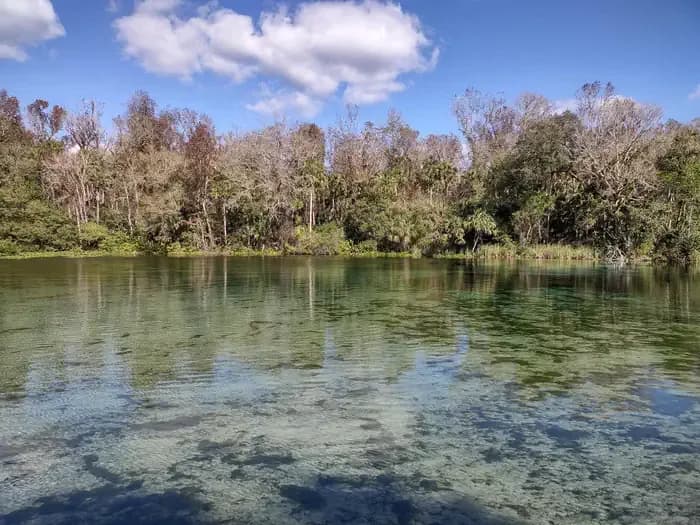
Alexander Springs Recreation Area
Altoona, Floridaspring
⛺🛶
 ★ Top verified
Juniper Springs Recreation Swimming Area, Marion County, FL
Astor, Floridaspring
⛺🛶
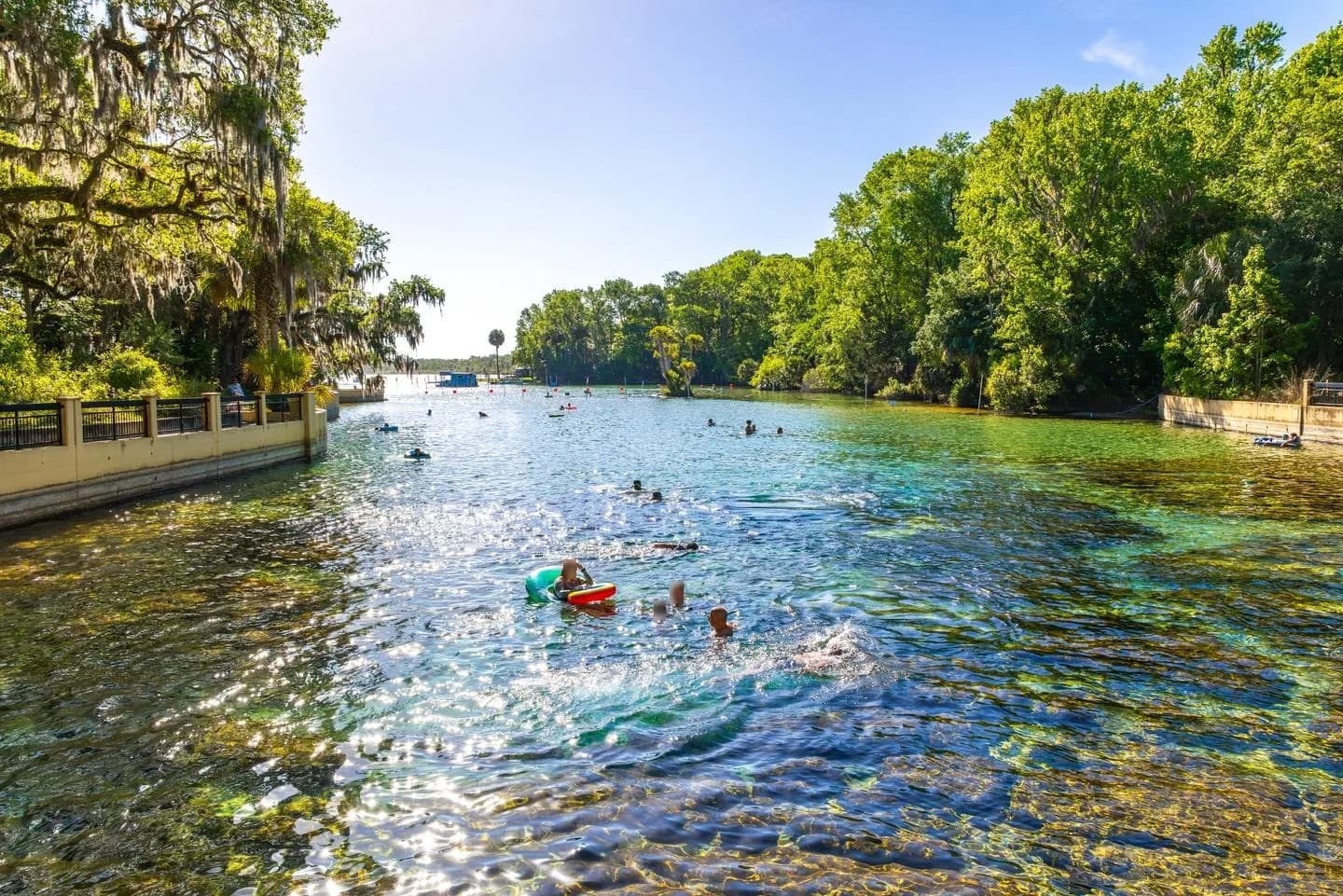
Salt Springs
Fort McCoy, Floridaspring
⛺🛶🚤
 ★ Top verified
Lake Stella Park, Beach & Recreation Area
Crescent City, Floridalake
🛶🚤
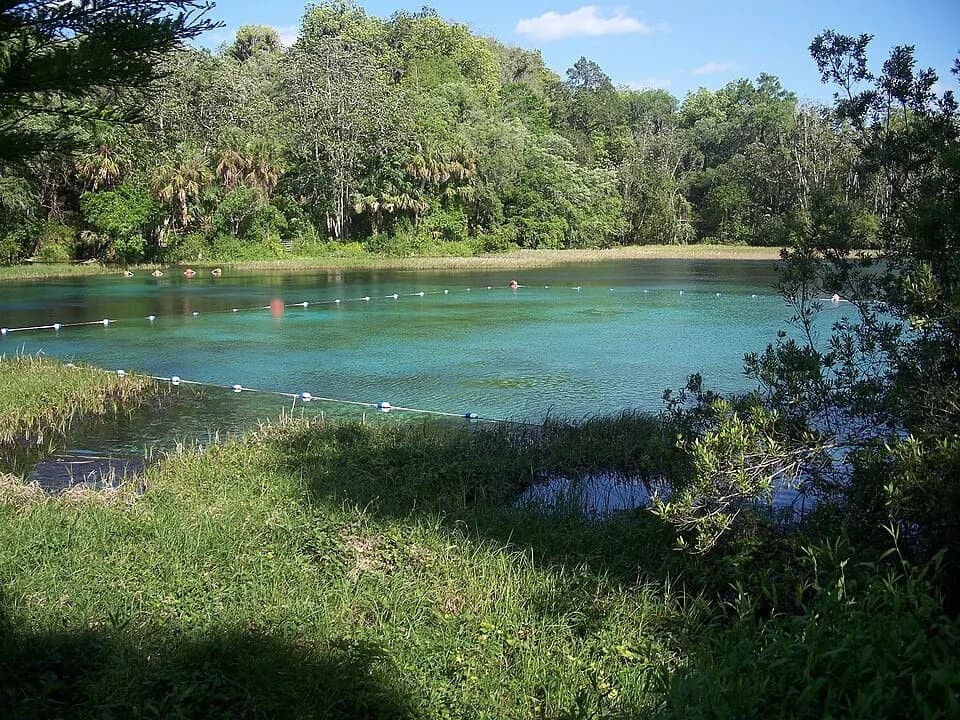 ★ Top verified
Rainbow Springs State Park
Dunnellon, Floridaspring
🛶🛟
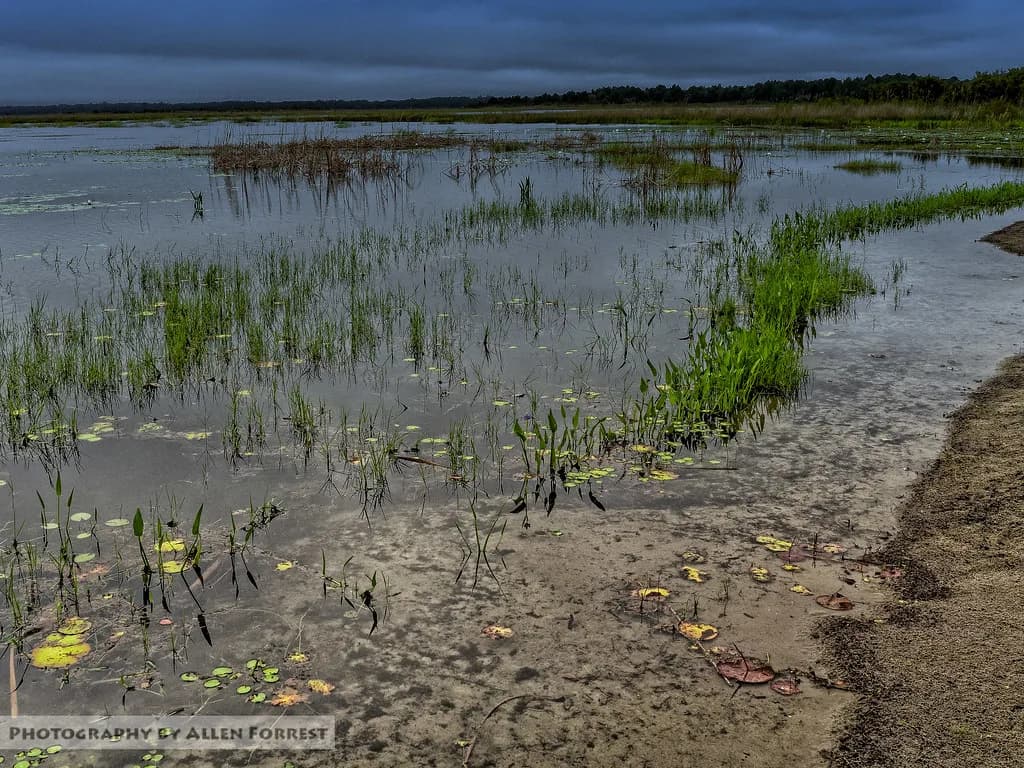
Keystone Beach/Geneva Jungle
Keystone Heights, Floridalake
🛶