Trail of Tears State Park
Jackson, Missouri · Trail Of Tears State Park
Verified · 4 independent sources · top-verified
- WATER
- lake
- ACCESS
- Designated swim area
- FEE
- Yes, see below
- SEASON
- May
About Trail of Tears State Park
Trail of Tears State Park is a 3,415-acre Missouri state park on the Mississippi River in Cape Girardeau County, near Jackson, MO, established in 1957 as a memorial to the Cherokee who died during the forced 1838 to 1839 removal. The park's official swimming hole is a designated sand beach on Lake Boutin, a small lake within the park (listed at 15 acres by the park and 20 acres by other sources), and Lake Boutin, not the adjacent Mississippi River, is the lake to swim in here. The beach is seasonal (May 22 to Sept. 7, sunrise to sunset), unguarded ('swim at your own risk'), and has paved parking, an accessible sidewalk, a restroom/change area, and a rinse station.
The park sits along a bluff-lined stretch of the Mississippi River, with a lookout point offering views of the river and the Illinois shore opposite; limestone bluffs here tower more than 60 feet above the river and serve as winter roosting sites for bald eagles. The interior is mature woodland with sharp ridges and steep ravines, including the 1,300-acre Indian Creek Wild Area (oak-hickory-tulip poplar forest along Indian Creek) and the 300-acre Vancill Hollow Natural Area, noted for eastern-U.S. plant species (American beech, tulip poplar, cucumber magnolia) rare elsewhere in Missouri. Lake Boutin, a small lake (15-20 acres depending on source) within the wooded interior, is the site of the designated swimming beach and fishing access, separate from the main river frontage. The park lies along the Great River Road National Scenic Byway.
Swimming at Trail of Tears State Park
Swimming is designated at a sand beach on Lake Boutin, a small, calm inland lake rather than the Mississippi River itself; the river is used by the park for fishing, boating, and wildlife viewing but is not presented as a swim area. The beach is open seasonally, May 22 through Sept. 7, sunrise to sunset, and is unguarded ('swim at your own risk,' per official park signage/website, no lifeguard is indicated). Beach-side amenities include a paved parking lot, an accessible concrete sidewalk from the parking lot to the beach, an accessible water fountain and push-button rinse station along that sidewalk, and an accessible vault toilet with side-transfer in the parking lot; a boat ramp and a lakeside picnic area (grills, table, water fountain) sit nearby. Boating on the lake is limited to electric motors only, so swimmers share the water with quiet, low-wake boat traffic. Lake Boutin is stocked with bass, sunfish, channel catfish, and crappie. No first-hand descriptions of water clarity or bottom conditions at the beach were found.
How to get to this swimming hole
The park entrance and visitor center are at 429 Moccasin Springs, Jackson, MO 63755-8295, along the Mississippi River corridor covered by the Great River Road National Scenic Byway, a few miles northeast of Jackson and near the unincorporated communities of Bainbridge and Moccasin Springs. The swimming beach itself is at a separate location within the park on Lake Boutin (beach coordinates 37.454699, -89.485693), reached via its own paved parking lot off the park's internal road system. No turn-by-turn driving directions from a specific highway were found on official sources.
Parking: A paved parking lot serves the Lake Boutin swimming beach directly, with an accessible sidewalk leading from the lot to the beach. A separate, steeper paved lot (average 6.2% slope) serves the adjacent boat ramp. The visitor center has its own level, paved lot with three accessible spaces.
The hike in
No hike is needed to reach the swim beach: it has its own paved parking lot with a flat, ADA-accessible concrete sidewalk running directly to the sand (under a minute's walk). Separately, the park has four named trails: Lake Trail (also known as Lake Boutin Trail, rated 4.4 out of 5 across roughly 277 hiker reviews and described by hikers as good for hiking, trail running, and camping with light crowds), Nature Trail, Peewah Trail, and Shepard Point Trail (steep drop-offs, adult supervision suggested). These are optional scenic hikes, not the access route to the beach, and the park notes there is no potable water on any of them.
Because access is drive-up/walk-up, this is best suited to visitors who want a beach day without a hike; anyone wanting to add a hike can do the separate Lake Trail loop near Lake Boutin or one of the other three trails.
Plan your visit
Bringing kids
OK with supervision
The designated swim area is a sand beach on a small, calm inland lake (not the Mississippi River), which is inherently gentler than a river current for kids. However, it is officially 'swim at your own risk' with no lifeguard on duty, and Missouri DNR runs routine summer E. coli bacteria testing on this beach; a swimming-not-recommended advisory was issued for it in early July 2025 (lifted by July 31, 2025, per KFVS12/KBSI reporting). Parents should check the current MO DNR beach-status page (dnr.mo.gov/water/alerts-hazards/beaches) shortly before visiting, and supervise closely since there's no lifeguard.
Parking
Free
Dedicated paved parking lot serves the Lake Boutin swim beach directly, with a level, ADA-accessible concrete sidewalk leading straight to the sand. A separate, steeper paved lot (avg. 6.2% slope) serves the adjacent boat ramp. No day-use or parking fee was found on any official park page.
Restrooms
Yes
Accessible vault toilet with side-transfer capability in the beach's paved parking lot. No indoor plumbed restroom or shower at the beach itself; hot showers exist only at the separate Mississippi River Campground within the park.
Hours
Lake Boutin swim beach is seasonal: May 22 through Sept. 7, sunrise to sunset. General park grounds are open 7 a.m.-10 p.m. (April-October) and 7 a.m.-6 p.m. (November-March).
On the water
Restrictions: Lake Boutin permits boating with electric motors only (gas motors are not allowed). Launch is via one of two concrete boat ramps in the park, one on Lake Boutin, one on the Mississippi River (the river ramp is inaccessible when the Cape Girardeau river stage is above 35 ft or below 14 ft). No mention of personal watercraft (jet skis) being permitted.
There is no on-site rental concession on Lake Boutin; boaters must bring their own kayak, canoe, or electric-motor boat.
What regulars say
Aggregate visitor ratings for the park overall run about 4 to 4.2 out of 5 across well over a hundred reviews, and the Lake Trail (Lake Boutin Trail) loop rates 4.4 out of 5 across roughly 277 hiker reviews, with hikers describing it as good for hiking, trail running, and camping, and noting it is 'unlikely you'll encounter many people.' One recent visitor reported that Mississippi River flooding got their camping reservation at the park cancelled, forcing them to a private campground nearby, a reminder that the park's river-adjacent campgrounds can be affected by high water. As noted above, local TV news reports also flagged a July 2025 E. coli swim advisory at the beach that was later lifted, underscoring that swim conditions here can vary summer to summer.
Backstory
The park commemorates the Cherokee forced removal enacted under the 1830 Indian Removal Act and the disputed 1835 Treaty of New Echota. In winter 1838-39, more than 16,000 Cherokee were forced on an roughly 800-mile march to Indian Territory (present-day Oklahoma); most detachments passed through Cape Girardeau County, and floating ice on the Mississippi River halted the crossing, forcing encampments on both riverbanks. An estimated 4,000+ Cherokee (nearly a fifth of the affected population) died along the route. Legend holds that Nancy Bushyhead Walker Hildebrand, sister of detachment leader Rev. Jesse Bushyhead and wife of detachment leader Lewis Hildebrand, died and was buried within the park's boundaries; the park's Bushyhead Memorial commemorates her and other Cherokee who died on the march. The park was established in 1957, is a certified site on the Trail of Tears National Historic Trail, and an archaeological site within it was listed on the National Register of Historic Places on December 2, 1970. The visitor center's exhibits cover this history plus local wildlife.
Trail of Tears State Park: FAQ
Does Trail of Tears State Park charge a fee?
No day-use or beach entrance fee is listed on any official park page found. Overnight camping is fee-based and reservable up to 12 months in advance (877-ICampMO / 877-422-6766); see the park's separate published camping rate schedule for current camping fees, which are distinct from any swimming-beach cost.
Is Trail of Tears State Park kid friendly?
The designated swim area is a sand beach on a small, calm inland lake (not the Mississippi River), which is inherently gentler than a river current for kids. However, it is officially 'swim at your own risk' with no lifeguard on duty, and Missouri DNR runs routine summer E. coli bacteria testing on this beach; a swimming-not-recommended advisory was issued for it in early July 2025 (lifted by July 31, 2025, per KFVS12/KBSI reporting). Parents should check the current MO DNR beach-status page (dnr.mo.gov/water/alerts-hazards/beaches) shortly before visiting, and supervise closely since there's no lifeguard.
Do I need to hike to reach Trail of Tears State Park?
No significant hike is required. The swimming area is close to parking and access.
Where do I park for Trail of Tears State Park?
Dedicated paved parking lot serves the Lake Boutin swim beach directly, with a level, ADA-accessible concrete sidewalk leading straight to the sand. A separate, steeper paved lot (avg. 6.2% slope) serves the adjacent boat ramp. No day-use or parking fee was found on any official park page.
Can I bring a kayak or paddleboard to Trail of Tears State Park?
There is no on-site rental concession on Lake Boutin; boaters must bring their own kayak, canoe, or electric-motor boat.
When is the best time to visit Trail of Tears State Park?
The official swimming beach season runs May 22 through Sept. 7 (sunrise to sunset), which effectively defines the swim window; outside those dates the beach is not in season.
What are the rules at Trail of Tears State Park?
The Lake Boutin beach is open only in season (May 22-Sept. 7), sunrise to sunset, and is swim-at-your-own-risk with no indicated lifeguard. Statewide Missouri DNR park rules apply: alcoholic beverages are prohibited on beaches and in parking areas; pets must be leashed (no longer than 10 ft) and are not permitted in public swimming areas/beaches or in waters reserved for fishing; no hunting/firearms discharge or fireworks anywhere in the park; removal of plants, animals, rocks, or artifacts is prohibited. Boating on Lake Boutin is restricted to electric motors only. General park grounds are open 7 a.m.-10 p.m. (April-October) or 7 a.m.-6 p.m. (November-March).
More swimming holes near Jackson
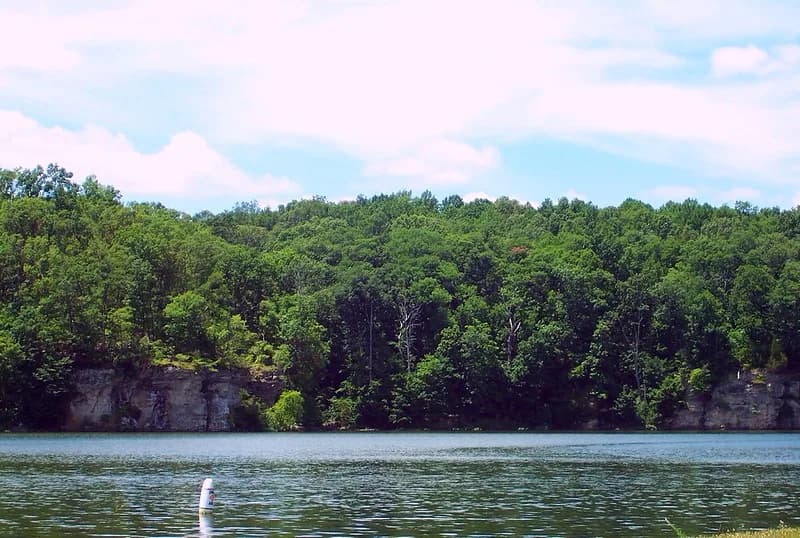
Poplar Camp Beach at Cedar Lake
Carbondale, Illinoisreservoir
⛺🛶🚤
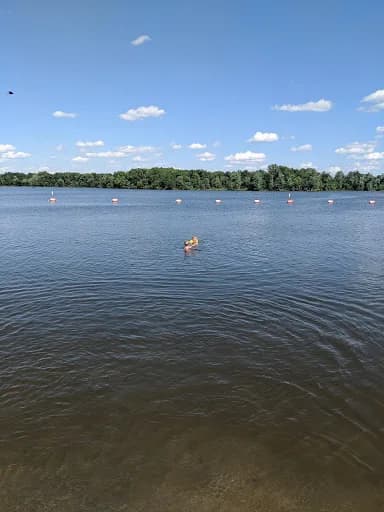
Crab Orchard Beach -
Carterville, Illinoisreservoir
⛺🛶🚤
 ★ Top verified
South Sandusky Beach
Benton, Illinoisreservoir
⛺🛶🏄🚤
 ★ Top verified
North Marcum Beach
Whittington, Illinoisreservoir
⛺🛶🚤
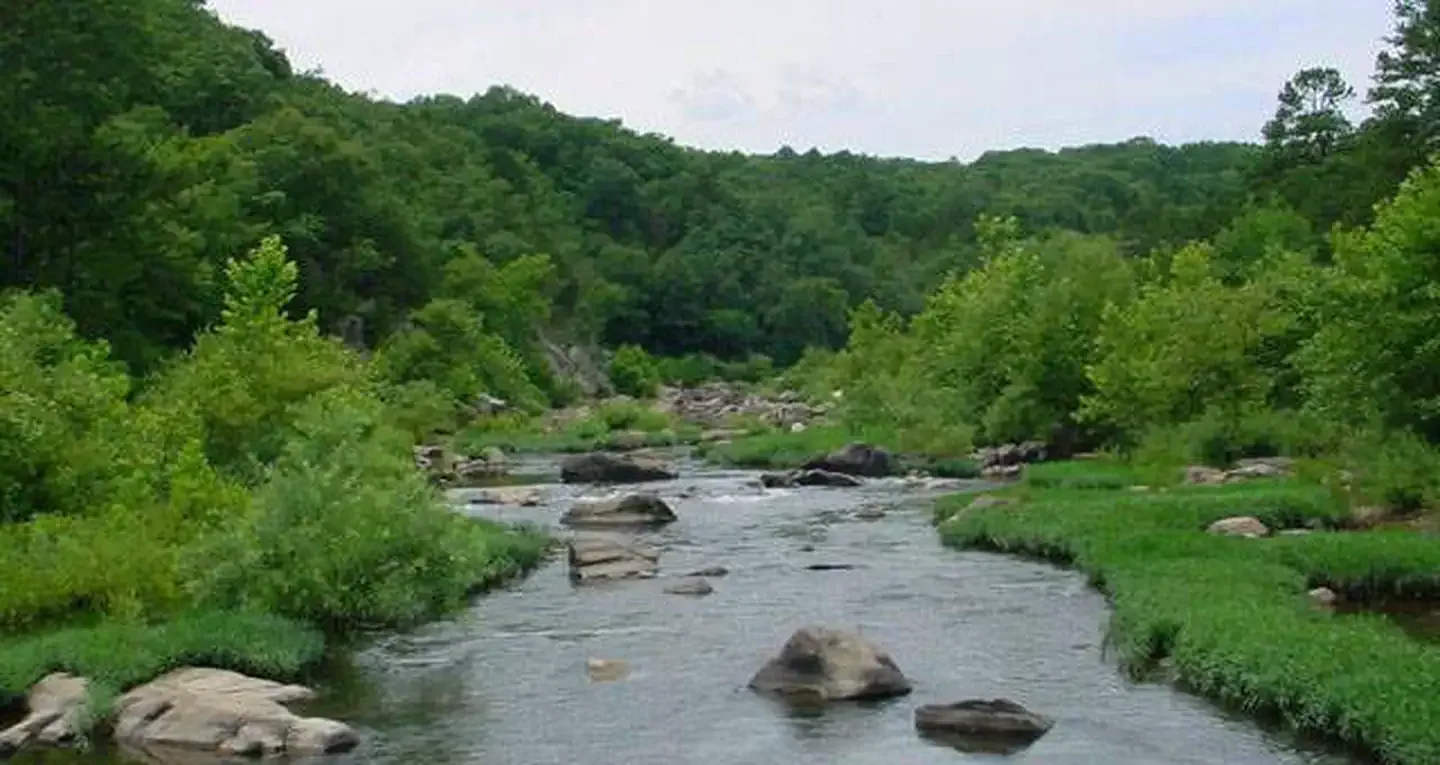
Silver mines recreational area
Ironton, Missouririver
⛺🛶
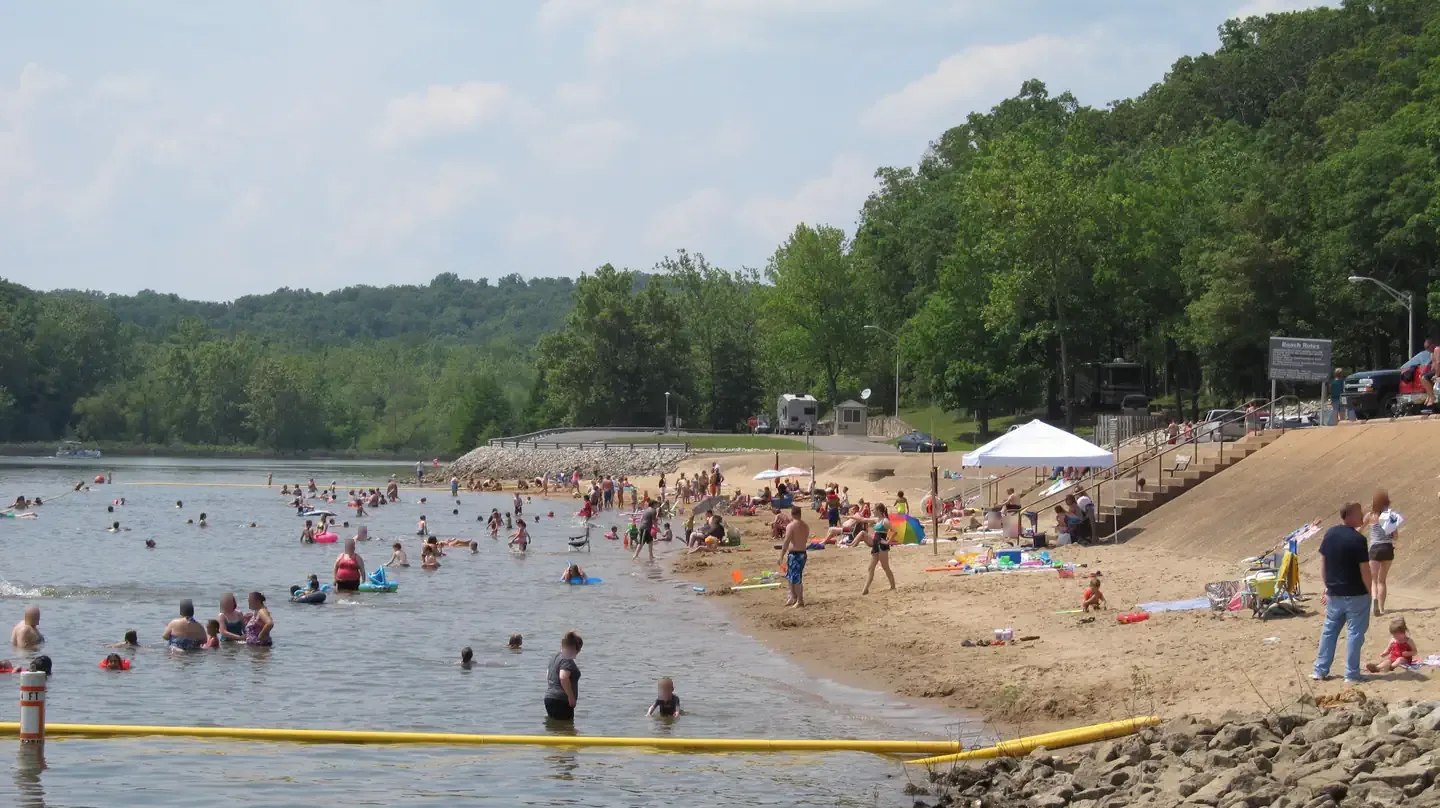
People's Creek
Wappapello, Missourireservoir
⛺🛶🚤